
Fruit Packaging & Logistics

At Anatolia Fruit, advanced packaging, standardized palletization, and strict cold chain logistics ensure that every shipment of fresh fruits and vegetables arrives at its destination in export‑grade condition. Our focus on fresh produce packaging standards, reefer container logistics, and export‑grade fruit crates supports international importers, supply chain managers, and logistics partners with reliable, quality‑driven cold chain management.
Our Commitment to the Cold Chain
We maintain temperature‑controlled handling from the orchard to the final warehouse, using pre‑cooling, ventilated packaging, and real‑time monitoring to extend shelf life and minimize post‑harvest loss. This approach forms the backbone of our fresh produce logistics management and ensures that our fruits and vegetables meet the highest export‑grade standards.
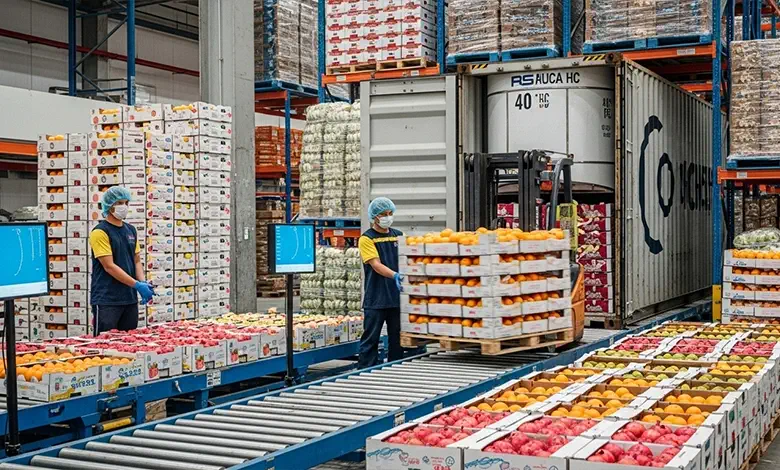
Packaging Solutions
We select packaging types according to fruit category and destination requirements, balancing strength, ventilation, and sustainability.
Citrus Fruits (Oranges, Lemons, Mandarins)
Citrus fruits are packed in ventilated cartons or plastic crates that allow airflow, reduce moisture buildup, and support gentle stacking. These packages meet export‑grade fruit crates and fresh produce packaging standards for sea and land transport.
Stone and Berries (Cherries, Apricots, Peaches, Figs)
Soft and delicate fruits are packed in lined telescopic cartons or rigid plastic boxes with internal dividers to prevent crushing and bruising. Each unit is designed for efficient palletization and reefer container logistics without compromising fruit integrity.
Vegetables (Tomatoes, Cucumbers, Peppers, Eggplants)
Vegetables are packed in sturdy open‑top boxes or crates with perforations for ventilation. These containers are compatible with Euro‑pallets and industrial pallets, enabling smooth integration into global fresh produce logistics networks.
Packaging Options
| Packaging Type | Typical Capacity | Standard Dimensions (approx.) |
|---|---|---|
| Plastic Crates | 10–15 kg | 400 × 300 × 200 mm |
| Telescopic Cartons | 7.5–10 kg | 400 × 300 × 170 mm |
| Open‑top Boxes | 10–20 kg | 500 × 400 × 250 mm |
| Multipurpose Export Cartons | 10–25 kg | 400 × 300 × 300 mm |
| Mesh Bags (consumer size) | 2.5–5 kg | 300 × 200 mm (filled) |
Palletization Standards
Our palletization process ensures safe, stable, and efficient transport for fresh produce logistics:
- Euro‑pallets (1200 × 800 mm) and industrial pallets (1200 × 1000 mm) are selected based on destination port standards and container layout.
- Crates and cartons are stacked in tight, interlocked patterns to minimize movement and avoid top‑loading.
- Corner protectors and edge boards are used to reinforce structural integrity during sea and land transport.
- Each pallet is wrapped with high‑tensile strength shrink film and labeled with product, batch, and destination information for full traceability.
Reefer Container Loading
Cold chain management begins with correct reefer container loading and temperature control:
- All pallets are pre‑cooled in cold rooms (8–12°C for most fruits) before loading into 40’ HC reefer containers.
- Containers are loaded with 18–20 pallets per unit, leaving space for proper airflow and preventing over‑packing.
- Temperature is set and maintained between 4–10°C, depending on the commodity, with humidity kept at 85–95% RH when required.
- Temperature and humidity data loggers monitor conditions throughout the journey, enabling real‑time cold chain for fresh fruits and quality verification after arrival.
Global Delivery Reach
Anatolia Fruit supports a flexible multimodal export network that integrates cold chain for fresh fruits and vegetables across different transport channels:
- Sea Freight – 40’ HC reefer containers connect Mediterranean ports (Mersin, İzmir, Antalya) to Europe, the Middle East, Eastern Europe, and Asia under standard INCOTERMS.
- Land Transport – Refrigerated trucks and containers deliver to regional markets and distribution hubs, with continuous temperature monitoring.
- Air Freight – For high‑value and short‑shelf‑life products, air‑freight options are available with priority cold chain handling from the packhouse to the destination warehouse.
At Anatolia Fruit, our “Zero‑Waste, Fresh‑to‑Door” logistics philosophy drives every stage of packaging and transport. By combining export‑grade fruit crates, optimized palletization, and strict cold chain management, we reduce post‑harvest loss and deliver maximum freshness to your doorstep.
Frequently Asked Questions
How long does a typical sea‑freight shipment take?
Standard sea‑freight shipments from Turkish ports to Europe usually take 7–12 days, with additional time for customs clearance and last‑mile distribution, depending on the country and terminal.
How do you monitor temperature and humidity during transport?
Each reefer container is equipped with temperature and humidity data loggers that record conditions at regular intervals. The data is available for clients to review and verify compliance with cold chain for fresh fruits requirements.
Can I request custom branding on packaging and cartons?
Yes. We offer customized labeling, barcodes, and brand logos on cartons, crates, and mesh bags, while maintaining compliance with export‑grade fruit crates and fresh produce packaging standards.
Do you use sustainable or biodegradable packaging?
We increasingly integrate biodegradable and recyclable packaging materials, including compostable trays and paper‑based liners, to support sustainable fruit packaging solutions and reduce environmental impact in the fresh produce supply chain.
What are the main benefits of using your standard palletization and reefer setup?
Standard palletization and dedicated reefer container loading reduce fruit damage, improve ventilation, support faster loading/unloading, and extend shelf life through consistent cold chain management from farm to warehouse.
